Pennsylvania's measles outbreak has claimed a ninth life, health officials announced on Monday, November 23, as the state remains the center of the worst measles year the United States has seen since 1991. The death comes just as millions of Americans travel for Thanksgiving, raising fears the virus could spread further over the holiday.
The latest victim was an unvaccinated resident of Centre County, in central Pennsylvania, who tested positive for measles and died. The health department released no further details, saying it was protecting the family's privacy.
A ninth death in Centre County
The Centre County death came just five days after the eighth, an unvaccinated resident of Clinton County announced on November 18. The nine deaths span seven counties: three in Lancaster, two in Jefferson, and one each in Centre, Clinton, Mifflin and Montour.
All nine people who died were either unvaccinated or too young to be vaccinated, according to the state health department. Lancaster County, the outbreak's epicenter, has recorded the most cases with 558, followed by Mifflin with 205 and Jefferson with 112.
The outbreak began in late April and has now spread across 46 counties. Pennsylvania has reported more measles cases and deaths than any other state this year, and these are the state's first measles deaths in 35 years.
The numbers behind the Pennsylvania measles outbreak
Pennsylvania has now confirmed 1,638 measles cases in 2026, up from 1,589 just five days earlier. Of those, 330 people have been hospitalized — about one in five of everyone infected — and only five cases have been in fully vaccinated people, fewer than 1 percent.
The picture nationally is just as serious. The Centers for Disease Control and Prevention has counted 5,838 confirmed measles cases across the country this year as of November 19, more than double the 2,289 cases reported in all of 2025. Cases have been reported in 47 jurisdictions, and 96 percent of this year's cases are linked to outbreaks, with 43 new outbreaks recorded in 2026.
The CDC reported 426 new cases in a single week recently, the largest one-week increase in decades. Wisconsin reported its third measles-related death on November 24, one day after Pennsylvania's ninth, bringing the total number of measles deaths recorded by states in 2026 to 14.
There is one confusing gap in the numbers. The CDC itself currently lists only six measles deaths nationally, far fewer than the 14 counted by state health departments. The difference emerged this year after the agency, under Health and Human Services Secretary Robert F. Kennedy Jr., began using national mortality data instead of state figures to count deaths. Kennedy has also publicly questioned the accuracy of Pennsylvania's case count.
Why the US lost its measles-free status
On November 17, the United States officially lost its measles elimination status, which it had held since 2000. The Pan American Health Organization revoked the status after the virus circulated continuously for at least 12 months — the threshold that defines elimination as lost.
Losing elimination status does not mean measles is suddenly everywhere. It means the virus is spreading on its own inside the country again, instead of arriving only in isolated cases from abroad — a striking reversal for a disease once declared beaten in America, which health officials blame on falling vaccination rates.
Measles is one of the most contagious diseases known — it can linger in the air for up to two hours after an infected person leaves a room, and it spreads through coughing and sneezing. The vaccine is about 97 percent effective after two doses, which is why nearly all of this year's cases have been in unvaccinated people.
Thanksgiving travel and what health officials advise
The timing could hardly be worse. The outbreak's latest death was announced at the start of the biggest travel week of the year, with about 81.5 million Americans on the move for Thanksgiving. Some families have already said they are skipping holiday travel because of the measles spread.
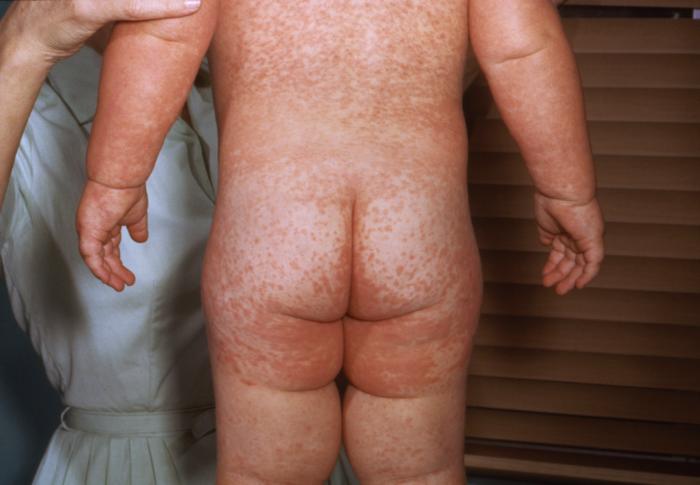
Health officials say the advice is simple: check your vaccination status before gathering with family, and anyone with measles symptoms — fever, cough, runny nose, red eyes, then the telltale rash — should stay home and call a doctor before visiting a clinic, so they do not expose others in a waiting room.
Pennsylvania's health department is running vaccination clinics across the state, including in the hardest-hit counties, and the CDC has provided the state with nearly $4 million in one-time emergency funding for the response effort in 2027. The state's measles dashboard updates on Mondays, Wednesdays and Fridays.
For now, the outbreak shows no sign of slowing — cases rose by 49 in a single day this week — and health officials are watching to see whether Thanksgiving gatherings become the next wave.